
WPC Benefits for Modern Interiors: Why WPC (Wood Plastic Composite) Boards Are the Future of Interior Design.
As builders, architects, and owners look for elements that mix ecology, durability, and beauty, current decorating keeps shifting. While standard supplies like particle board, MDF, and wood from nature have been used successfully for several decades, they frequently have problems that include termite problems, moisture damage, and repair issues.
In the area of WPC Benefits for Modern Interiors decorating, Wood Plastic Composite (WPC) boards are now a novel material. WPC boards are an ideal substitute for typical wood-based products, as they combine rigidity, water-resistant resilience, and sustainability.
This article will discuss WPC Benefits for Modern Interiors and clarify how WPC panels are made, as well as why architects and builders are beginning to favor them.
Understanding WPC Boards
Hardwood fibers or wooden powder are infused with thermoplastic fibers and special additives to make Timber Plastics Composite, or WPC, for long. To generate boards that integrate the endurance of plastic with the realistic feel of wood, these parts are treated with innovative manufacturing techniques.
Compared to conventional lumber, WPC boards are highly immune to bugs and pollution and do not easily collect water. It renders these especially helpful in areas like homes, baths, and wet places when wood-based products usually fail.
WPC planks are becoming a growing trend with modern homes and businesses due to these perks.
Why Modern Interiors Need Advanced Materials
Today’s interior design emphasizes stability and utility along with visual appeal. Material used in buildings and homes must be ready to endure typical use and tear while losing their luster.
Modern decoration values resilience and function beside aesthetic appeal. Material used for homes and businesses should be capable of enduring everyday use and tear without losing their luster.
Typical timber products can encounter issues like
Absorption of water
Impact from pests
Swelling and warping
High requirements for service
These challenges have led builders and designers
homeowners to use alternatives, for instance, WPC boards, which offer long performance with less attention.
Major WPC Benefits for Modern Interiors
1.Excellent Water Resistance
The liquid resilience of WPC panels forms one of its primary advantages. Conventional plywood and MDF boards have a risk of widening and absorbing damp over time, causing harm to the structure.
But WPC boards are ideal for areas that are prone to rain since they can withstand water penetration. While WPC boards retain their strength and form even in humid conditions, they are excellent choices for homes, baths, and bathrooms.
One of the main reasons WPC boards are so common in current interior design is their resistance ability.
2. Termite and Pest Resistance
Wooden household items and interior structures may suffer serious harm from insects and boring insects. Pest repairs can be pricey and laborious.
While WPC panels are built to stand up to insects and various other pests, they’re a solution. Durable durability is made certain by the hybrid product’s plastic elements, which stop pests from feeding on the board.
This means future upkeep expenses will be reduced, and consumers and developers have no need to fret about pest-related harm.
3. High Durability and Strength
While selecting components for the inside structure, longevity is a crucial consideration. Panel panels, drawers, and furnishings must endure continuous use sans crumbling or distorting.
Excellent solidity and longevity are hallmarks of WPC boards. With natural wood, they do not simply split, twist, or break.
WPC panels are appropriate for both residential and business areas because of their strong structure, which enables them to resist heavy weights and daily use.
4. Eco-Friendly Construction Material
Ethical sustainability becomes a growing concern in the building sector. As WPC boards are created from recovered wood as well as plastic waste, they help ecological sustainability.
WPC is made from recycled materials, so it’s greener and utilizes less virgin lumber. As a result of this, WPC boards are becoming a viable option for building contractors and builders.
5. Low Maintenance Requirement
Polishing, treatment with chemicals, and protective coatings are often required to keep ancient wood furniture and décor.
Conversely, WPC panels require minimal upkeep. It is simple to wash owing to the flat surface, which resists dirt and staining accumulation.
WPC tables will normally keep looking new with just a quick wipe utilizing a dry cloth. Busy houses and companies particularly benefit from this cost-effective feature.
6. Excellent Workability
The ease of production of WPC boards is another plus. Like normal wood goods, WPC boards can be cut, drilled, tapped, and cut by carpenters and interior architects.
It renders them suited to plenty of uses, notably the making of furniture and artistic design.
In addition, WPC panels can support wood veneers, plastics, and plywood, giving designers the ability to create unique finishes that match current trends in interior design.
Applications of WPC Boards in Modern Interiors
The versatility of WPC boards allows them to be used in various interior design applications.
Modular Kitchen Cabinets
Materials for kitchen interiors must be able to withstand heat, moisture, and spills. Because WPC boards are sturdy and stable even in harsh conditions, they are ideal for modular kitchen cabinets.
Wardrobes and Storage Units
The durability and termite resistance of WPC boards are advantageous for contemporary storage cabinets and closets. These boards guarantee that furniture will continue to be strong and useful for many years.
Bathroom Furniture
Another of a homeowner’s more moist spaces is the bath. Since WPC boards are so resilient to water damage, they are often utilized for cabinetry and bathroom sinks.
Decorative Wall Panels
WPC boards are used by interior architects for creating fashionable wall panels and accent pieces. These panels enhance the aesthetic allure of commercial spaces, work areas, and living spaces.
Office Interiors
Longevity and minimal maintenance are important in commercial environments. WPC panels are frequently used for cabinetry, walls, and office workstations.
Comparing WPC Boards with Traditional Materials
There are a variety of benefits when comparing WPC boards with plywood, MDF, or wood.
Although traditional materials may have a natural appearance, they frequently have difficulties with insect prevention and water resistance. WPC sheets combine the resilience of today’s composite materials with the look of wood.
They can perform better than typical materials in a range of residential uses because of this combo.
Growing Demand for WPC Boards in the Interior Industry
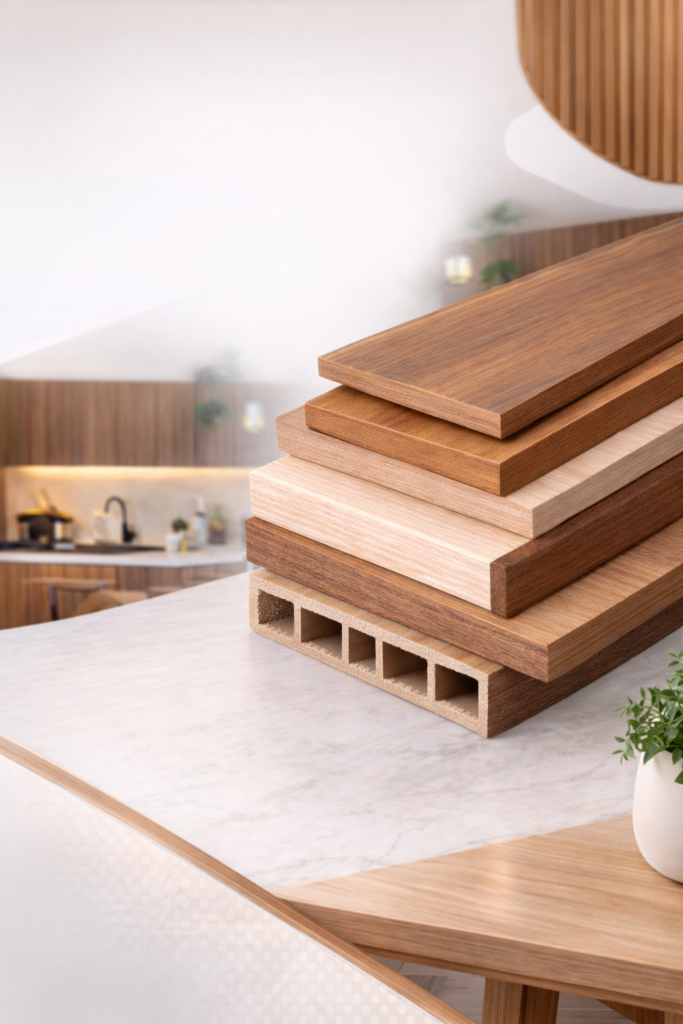
The desire for advanced materials providing improved performance as well as environmental responsibility is expanding in the global interior design field.
Because WPC boards remove many of the issues with typical wood products, they are gaining in popularity. WPC panels are used frequently by designers, architects, interior designers, and constructors to create trendy, long-lasting, and healthy interiors.
By delivering superior WPC boards made for today’s building needs, organizations like Katwood assist in filling this demand.
Modern interior materials and sustainable design concepts are widely discussed by experts on Dezeen.
As interior design continues to evolve, the WPC benefits for modern interiors are making WPC boards a popular choice for strong, stylish, and long-lasting interior solutions.
The Future of WPC in Interior Design
Materials like WPC board are going to become even more vital in the design industry as construction innovations occur.
The future of interior design is strongly influenced by the WPC benefits for modern interiors, as these boards offer durability, waterproof performance, and eco-friendly solutions for modern spaces.
Composites are a good option for both residences and business buildings owing to their mix of strength, quality of life, and aesthetic adaptability.
WPC boards are likely to become one of the more common materials used in traditional interior design as awareness of green construction methods increases.
Conclusion
Sustainable and durable supplies have gotten more prevalent in the building design industry. As WPC boards are durable, waterproof, antimicrobial, and require minimal upkeep, they fulfill all of these needs.
WPC planks are changing the creation of modern-day spaces, ranging from colourful wall decor and work area chairs to modular kitchens and closets.
the WPC benefits for modern interiors make it a smart choice for durable, waterproof, and termite-resistant interior design solutions.
Owners and architects can build rooms that are not merely stylish but also durable and ecologically conscious using premium items from reputable firms like Katwood.